


.svg)

Αnnouncements
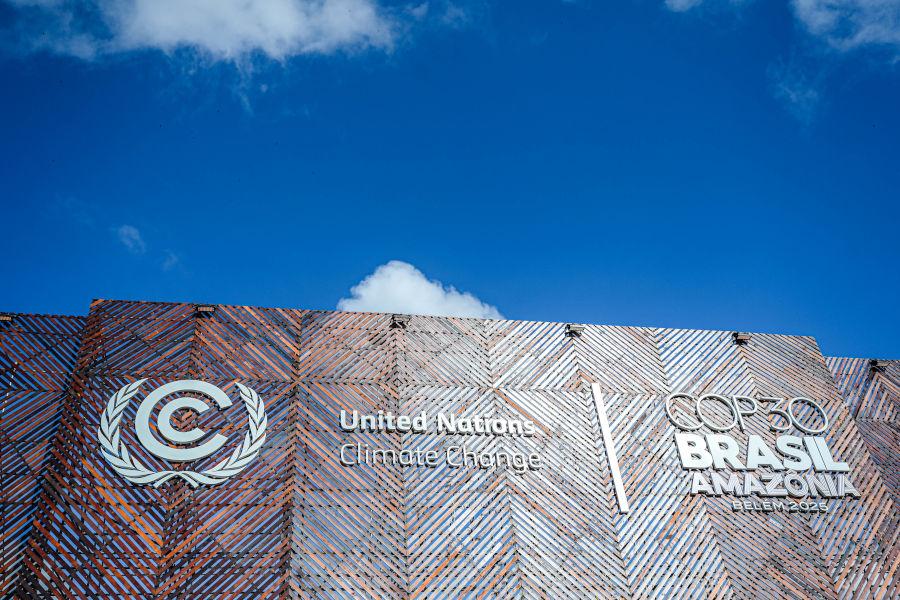
COP30 outcomes: New international developments in adaptation and climate action
10-11-2026
11:03 pm
The United Nations Climate Change Conference (COP30), held from 20 to 30 November 2025 in Belém, Brazil, attracted considerable political attention as it took place for the first time on the edge of the Amazon rainforest. Many viewed it as the “COP of implementation”, with a focus on moving from commitments to meaningful action.
New and strengthened climate plans (NDCs)
Before and during COP30, many countries submitted revised or more ambitious Nationally Determined Contributions (NDCs).
The EU announced a new target for 2035, involving an emissions reduction of 66.25–72.5% compared with 1990, in line with its roadmap towards climate neutrality by 2050.
Countries including Brazil, Japan, Norway, Singapore, South Africa, Switzerland, the United Arab Emirates and the United Kingdom also submitted strengthened NDCs.
In total, more than 122 countries had submitted NDCs by the end of the conference, covering almost 80% of global emissions.
Climate change adaptation
Adaptation was a central priority at COP30, with an emphasis on translating international commitments into practical results:
- Countries advanced the implementation of the new climate finance framework (NCQG), which aims to mobilise at least USD 300 billion per year in public adaptation finance by 2035.
- A call was adopted for adaptation finance to be at least tripled within the NCQG.
- Work continued on developing adaptation indicators to track actual progress at the level of communities and ecosystems.
The EU and its Member States remain the world’s largest providers of climate finance, contributing EUR 31.7 billion in 2024, approximately half of which supports adaptation and resilience.
Reducing fossil fuel use and strengthening clean energy
During the second week of the conference, discussions intensified on accelerating the transition away from fossil fuels, while more than 80 countries—including the EU—joined the Brazil-led partnership for transitioning away from fossil fuels.
The EU reaffirmed its commitment to:
- tripling global renewable energy capacity by 2030;
- doubling energy efficiency;
- accelerating the clean energy transition.
The social dimension of the climate transition
COP30 also highlighted the need for a just and socially inclusive transition.
A new Belém Gender Action Plan was adopted, while discussions addressed the creation of mechanisms to protect workers and communities during the energy transition.
Initiatives for forests and carbon markets
Important initiatives were announced to:
- protect tropical forests;
- improve transparency in carbon markets;
- strengthen international cooperation on carbon pricing mechanisms.
Links with adaptation in Greece
The COP30 decisions reinforce the importance of access to reliable data, decision-support tools and stronger resilience at national and local levels.
In Greece, the National Adaptation Hub contributes to these goals by providing climate projections, thematic information, guidance and practical tools for public bodies and organisations.